

Connecting multiple FTTH (Fiber to the Home) fiber optic cables together is a crucial task in the deployment and expansion of high - speed fiber optic networks. As a supplier of FTTH Fiber Optic Cables, I understand the importance of providing clear guidance on this technical process. In this blog, I will share some effective methods and key considerations for connecting multiple FTTH fiber optic cables.
Understanding FTTH Fiber Optic Cables
Before delving into the connection methods, it's essential to have a basic understanding of FTTH fiber optic cables. Our FTTH Fiber Optic Cable is designed specifically for the last - mile connection in fiber optic networks, bringing high - speed internet directly to homes and small businesses. These cables are typically lightweight, flexible, and have excellent transmission performance, capable of supporting high - bandwidth applications such as 4K video streaming, online gaming, and cloud computing.
Methods of Connecting FTTH Fiber Optic Cables
Fusion Splicing
Fusion splicing is one of the most common and reliable methods for connecting fiber optic cables. It involves using a fusion splicer to melt the ends of two fiber optic cables together, creating a permanent and low - loss connection.
- Preparation: First, strip the outer jacket of the cables to expose the fiber cores. Then, clean the fiber cores using a lint - free cloth and a suitable cleaning solution to remove any dirt or contaminants. Next, use a fiber cleaver to make a precise cut at the end of each fiber core, ensuring a flat and perpendicular surface.
- Splicing Process: Place the prepared fiber cores into the fusion splicer. The splicer will align the cores precisely using cameras and sensors, and then apply an electric arc to melt the ends of the fibers, fusing them together. After the splicing is complete, the splicer will display the splice loss, which should be within an acceptable range (usually less than 0.1 dB).
- Protection: Once the fusion splicing is done, protect the spliced area using a splice protector. This protector provides mechanical strength and environmental protection to the spliced fiber, preventing it from being damaged by bending, pulling, or moisture.
Fusion splicing offers several advantages, including low insertion loss, high mechanical strength, and long - term reliability. However, it requires specialized equipment and trained technicians, which can increase the cost and complexity of the installation.
Mechanical Splicing
Mechanical splicing is another option for connecting FTTH fiber optic cables. It uses a mechanical splice connector to align and hold the fiber cores together without melting them.
- Preparation: Similar to fusion splicing, strip the outer jacket of the cables and clean the fiber cores. Then, use a fiber cleaver to make a clean cut at the end of each fiber core.
- Splicing Process: Insert the prepared fiber cores into the mechanical splice connector. The connector uses a precise alignment mechanism, such as a V - groove or a capillary tube, to align the cores accurately. Once the fibers are inserted, a locking mechanism is used to secure them in place.
- Sealing: After the mechanical splicing is complete, seal the connector to protect it from dust, moisture, and other environmental factors. This can be done using a heat - shrink sleeve or a protective cap.
Mechanical splicing is relatively easy to perform and does not require expensive equipment. It is also a more flexible option, as it can be easily disassembled and reassembled if necessary. However, mechanical splices generally have higher insertion loss compared to fusion splices and may not be as reliable in long - term applications.
Connectorization
Connectorization involves attaching fiber optic connectors to the ends of the cables and then connecting the connectors together using a mating adapter.
- Connector Installation: First, strip the outer jacket of the cable and expose the fiber core. Then, clean the fiber core and insert it into the connector body. Use an epoxy or a mechanical crimping method to secure the fiber core in the connector. After that, polish the end face of the connector to ensure a smooth and flat surface for optimal light transmission.
- Connection: Once the connectors are installed on both cables, use a mating adapter to connect them together. The mating adapter aligns the connectors precisely and provides a low - loss connection between the fiber cores.
Connectorization offers the advantage of easy installation and reconfiguration. It allows for quick and convenient connections and disconnections, making it suitable for applications where frequent changes or maintenance are required. However, connectorized joints may have slightly higher insertion loss compared to fusion - spliced joints, and the connectors need to be properly maintained to ensure good performance.
Key Considerations in Connecting FTTH Fiber Optic Cables
Environmental Conditions
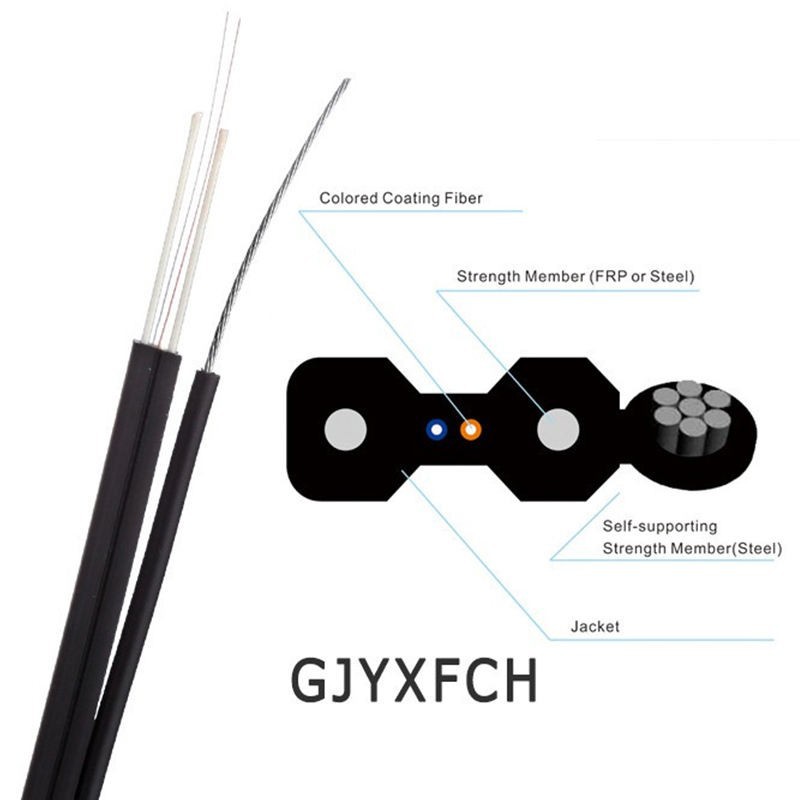
The environmental conditions where the cables are installed can have a significant impact on the performance and reliability of the connections. For example, in outdoor installations, the cables may be exposed to extreme temperatures, humidity, and UV radiation. In such cases, it is important to use cables and connectors that are designed to withstand these environmental factors. Our Gjyxfch Fiber Optic Cable is engineered to provide excellent performance in harsh environmental conditions, ensuring long - term reliability.
Cable Management
Proper cable management is essential to prevent cable damage and ensure easy access for maintenance. When connecting multiple cables, make sure to label the cables clearly and organize them neatly. Use cable trays, conduits, or cable ties to secure the cables and prevent them from being tangled or bent excessively.

Testing and Verification
After connecting the fiber optic cables, it is crucial to test and verify the performance of the connections. Use an optical time - domain reflectometer (OTDR) or a light source and power meter to measure the insertion loss and return loss of the connections. Make sure that the measured values are within the acceptable range specified by the industry standards. If the losses are too high, it may indicate a problem with the splicing or connectorization process, and the connections need to be re - evaluated and corrected.
Our Product Offerings
As a leading supplier of FTTH fiber optic cables, we offer a wide range of high - quality products to meet the diverse needs of our customers. Our CJYXFCH Drop Cable is a popular choice for FTTH applications, featuring excellent flexibility, low attenuation, and high mechanical strength. We also provide a comprehensive range of accessories, such as fusion splicers, mechanical splice connectors, and fiber optic connectors, to support the installation and connection of our cables.
Conclusion
Connecting multiple FTTH fiber optic cables together requires careful planning, proper techniques, and high - quality products. Whether you choose fusion splicing, mechanical splicing, or connectorization, it is important to follow the best practices and consider the environmental conditions, cable management, and testing requirements. As a trusted supplier of FTTH fiber optic cables, we are committed to providing our customers with the highest - quality products and technical support. If you are interested in purchasing our products or have any questions about fiber optic cable connection, please feel free to contact us for further discussion and procurement negotiation.
References
- "Fiber Optic Splicing Handbook" by The Fiber Optic Association
- "Fiber Optic Network Design and Installation" by Jeff Hecht
- Industry standards such as ITU - T G.652 and ISO/IEC 11801